
Signs it's time
Multiple patched seams. Water standing in the trough after a dry day. Rust streaks on steel. Nail holes in the fascia from three previous hanger systems. Gutter that's separated from the fascia along a whole run.
One more: paint or finish that's chalked out to a dull gray. That's cosmetic on its own, but it usually means the gutter is old enough that the rest of the list is coming.
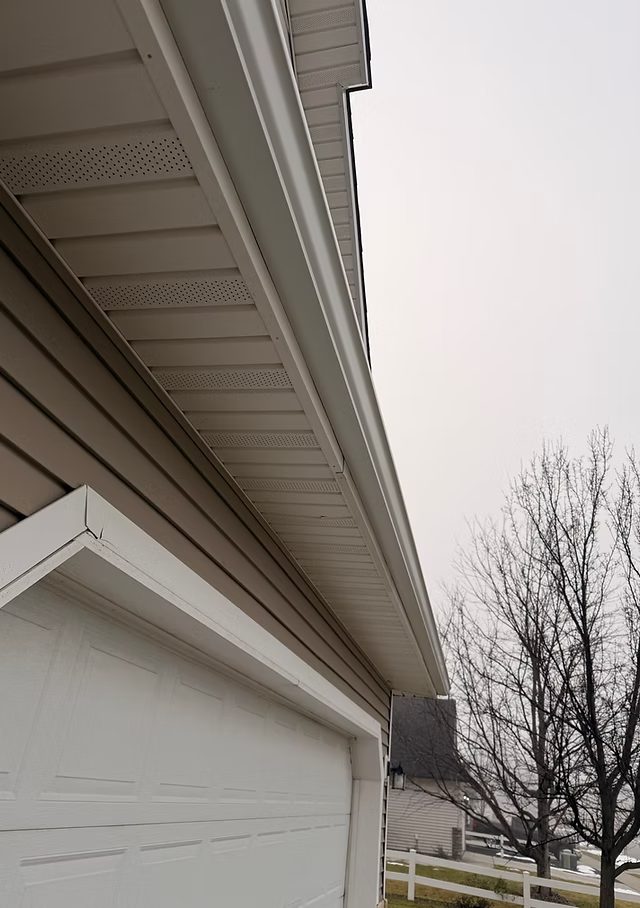
What replacement includes
Old gutter and downspouts come down and leave with us. We inspect the fascia and drip edge with everything off — that's the only time you get a clear look.
New seamless runs rolled on site, hung on hidden hangers every two feet, pitched to the drops. Corners sealed, end caps sealed, downspouts strapped to the wall.
We flush the system with a hose before we call it done and walk it with you.
The fascia conversation
About a third of replacement jobs turn up at least one soft board. We flag it during the measure where we can see it, and confirm once the old gutter is off.
Options are replacing the board, or replacing and wrapping it in aluminum trim coil so it's done with. Wrapping costs a bit more up front and removes the repaint cycle.
Doing it with a roof
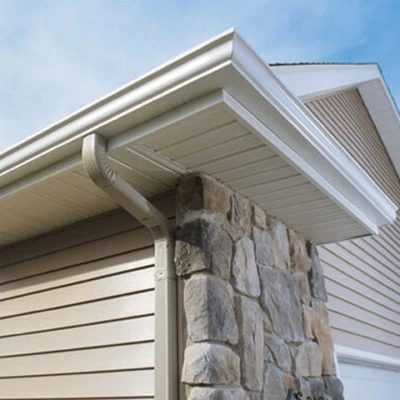
If a roof replacement is coming, do the gutters with it. The drip edge, the first shingle course and the gutter all meet at the same line, and coordinating them means the water actually transitions correctly.
John Beal Roofing does both, so it's one crew, one schedule, and no finger-pointing between trades.
Why St. Louis gutters wear out early
St. Louis winters swing above and below freezing over and over. Every time water freezes in a trough it adds weight and pushes on the seams, and every thaw lets it drain back through whatever gap the ice opened. A few seasons of that and sealant at the corners lets go, spikes start backing out of the fascia, and runs begin to sag in the middle.
Our trees add to it. Oak leaves, maple seeds and sweetgum balls sit in the bottom of a gutter and hold moisture against the metal year-round. On a lot of 1950s and 1960s ranches in the county, and on older brick homes in the city, we still find undersized gutters, patched sectional runs, or two generations of hangers nailed into the same board. At that point repair is just buying time.
Replacement, step by step
We start by measuring every run and noting where each downspout sits and where its water ends up. On replacement day the old gutters, spikes and downspouts come off, and we probe the fascia behind them. Soft or rotted board gets replaced before anything new is hung, because a new gutter fastened into bad wood fails the same way the old one did.
The new gutter is formed on site to the exact length of each run, hung on hidden hangers driven into solid wood, and pitched toward the outlets so water doesn't sit. Downspouts go back on, upsized where the roof area calls for it, and the old metal leaves with us. Before we go, we run water through the system so you can see it drain.
Picking the right size for your roof
Most St. Louis homes do well with 5-inch K-style. Steep roofs, long uninterrupted roof planes and valleys that dump into one corner often need 6-inch gutters and larger downspouts to keep up with a summer downpour. We size by roof area and pitch, not by whatever was there before, since the original gutter is often the reason water was spilling over in the first place. See our gutter sizing guide for how that works.
How to compare replacement bids
Bids are easy to compare on price and hard to compare on scope. Look at the metal gauge, the hanger type and spacing, how many downspouts are included and what size, whether fascia repair is priced or left out, and whether tear-off and haul-away are part of the number. If two quotes don't list the same items, they aren't quoting the same job. Our cost guide walks through each line.
Aluminum, steel, copper or half-round
Seamless aluminum is the standard for most St. Louis homes. It doesn't rust, it comes in baked-enamel colors, and it can be formed on site to any length. Steel is heavier and resists dents better but can rust where it's cut. Copper and half-round profiles suit older brick homes and historic city neighborhoods, where a K-style gutter would look out of place. Our copper and half-round pages cover those options.
Timing your replacement
Late spring and early fall are the easiest times to replace gutters in St. Louis. The weather is steady, the trees aren't dropping much, and you're ready before the heavy storm season or before leaves and ice load the new system. If your gutters are actively leaking into the fascia or the basement, though, don't wait for a better month. We replace gutters year-round, and fixing the water problem now usually costs less than the damage another season would do. See our guide to the best time of year to replace gutters.
Questions people ask
How long do gutters last in St. Louis?
Aluminum, 20 to 25 years. Steel, less — it rusts. Copper will outlast the people who installed it.
Should I replace gutters and roof together?
If both are due, yes. They meet at the same edge and the sequencing matters. It also saves a mobilization.
How much does gutter replacement cost?
It's priced per foot of gutter and downspout, adjusted for height and any fascia work. See our cost page for real ranges.
Do you haul the old gutters away?
Yes, included. The aluminum gets recycled.
Can you match my trim color?
Over twenty baked-enamel colors in stock, and we bring samples to hold against your trim.
Can you replace gutters in the winter?
Yes. Seamless gutters can be formed and hung year-round. We schedule around ice and snow on the roof edge and use sealants that are rated for cold-weather work.
Will new gutters fix water in my basement?
Often they're part of the fix. A basement can also take on water because of where the downspouts discharge and how the yard is graded. We'll show you where your roof water goes now and where it needs to go.
Do I need to be home during the replacement?
Not usually. We go over the scope with you before the job, then send photos of anything we find behind the old gutters, like rotted fascia, so you can approve those repairs.
Free estimate
We measure, we look at the fascia, and you get a number in writing.
Talk to a real St. Louis gutter company
Third generation, family-run since 1947. Somebody picks up, day or night.