
Sizing and count
Standard is a 2x3 downspout on 5-inch gutter and a 3x4 on 6-inch. A 3x4 moves a little over twice the water of a 2x3, which matters more than most people expect.
Count matters as much as size. The working rule is one downspout for roughly every 30 to 35 feet of gutter, and more where a big roof plane funnels into one spot. We see plenty of homes where adding a second drop fixed an overflow that a bigger gutter wouldn't have.
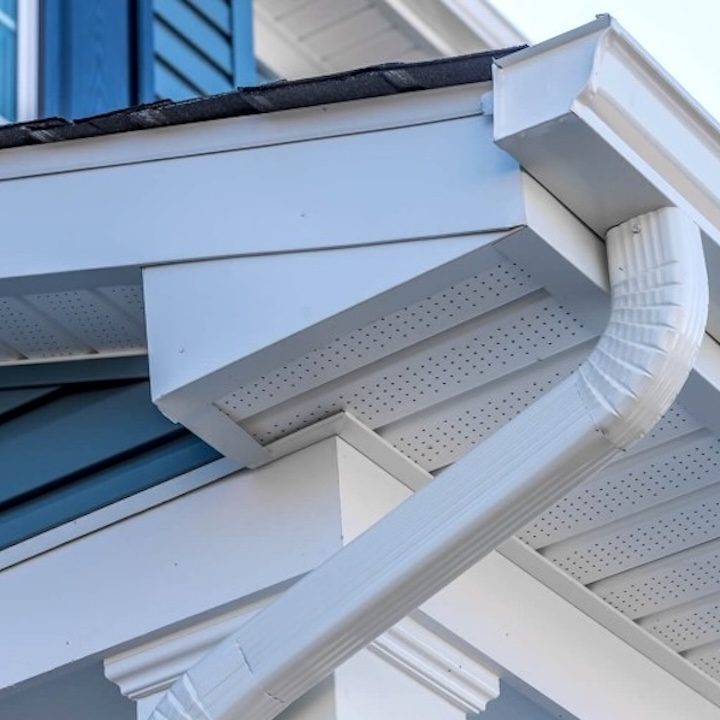
Where the water goes
Six feet from the wall is the minimum we're comfortable with, and ten is better on a flat lot. An elbow and a splash block at the slab does almost nothing except move the puddle three inches.
On a graded lot, a solid extension out to where the ground falls away is usually enough. On flat North County lots or hillside sites in Fenton and Sunset Hills, buried line is the real answer.
Buried drain lines
We trench, lay solid PVC — not corrugated black pipe, which crushes and holds sediment — and run it out to daylight or a pop-up emitter at a low point.
Solid pipe with a proper fall and a cleanout can be rodded out if it ever needs it. Corrugated line buried at a shallow depth is a repair somebody makes in ten years.

The signs you have a discharge problem
A trench worn into the mulch under one downspout. Efflorescence or a damp line on the basement wall on that same corner. Mud splashed up the siding two feet. A section of settled sidewalk right below an elbow.
Those all point at the same thing, and none of them are fixed by cleaning the gutter.
Why clay soil makes downspouts matter here
Much of the St. Louis area sits on clay soil that swells when it's wet and holds water against a foundation instead of draining it away. A downspout dumping right at the corner of the house puts hundreds of gallons into that soil in one storm. Over time that shows up as damp basement walls, seepage at the floor joint, and cracks in older block foundations. Getting the water a good distance out is one of the cheapest ways to protect a basement. Our page on gutter water and foundation damage goes deeper.
When to upsize downspouts
A lot of houses still have standard 2x3 downspouts on roof areas that need more. If a gutter overflows right at the outlet during heavy rain while the rest of the run is fine, the downspout is the bottleneck. Larger 3x4 downspouts carry much more water and clog less often, since leaves and sweetgum balls pass through them more easily. Sometimes adding one more downspout to a long run does more than any other change.
Placement that works and looks right
We place downspouts at corners and along the house where they're least noticeable, keep their water off walkways and driveways where it would freeze, and match the color to your gutters and trim. Where a yard slopes back toward the house, a buried drain line can carry water past the slope to daylight.
Buried lines or above-ground extensions
Above-ground extensions are the simplest fix: inexpensive, easy to move, and easy to see when something's wrong. The drawbacks are that they get stepped on, run over by mowers and kicked loose. A buried drain line keeps the yard clear and carries water farther, but it needs steady slope and a good outlet at the end, or it will hold water and clog. We'll recommend the option that fits your yard, your grade and how far the water needs to go.
Check your downspouts in the next rain
The easiest way to find a drainage problem is to walk around the house during a steady rain. Look for gutters spilling over at the outlet, water bubbling out of the top of a downspout, puddles forming against the foundation, and extensions that have come loose. Take a few photos. They tell us more than any description and help us plan the fix before we even get there.
Downspouts on older St. Louis homes
Older brick homes in the city and inner-ring suburbs often have downspouts that connect straight into a pipe going into the ground, put in decades ago. Some of those lines still work. Many are cracked, packed with roots or collapsed, so the water backs up at the joint and pours out next to the foundation. If water bubbles up at the base of a downspout during rain, that's the likely cause. We'll test the line, show you what we find, and recommend either clearing it, replacing it, or rerouting the downspout above ground to a safer discharge point. Our page on downspout drainage solutions covers more options.
Questions people ask
How far should a downspout discharge from the house?
Six feet minimum, ten if the lot is flat. The goal is past the backfill zone, where the soil is looser and water finds its way down the wall.
Can you bury my downspouts?
Yes. We use solid PVC with a proper fall, out to daylight or a pop-up emitter, with a cleanout so it can be serviced.
How many downspouts do I need?
Roughly one per 30 to 35 feet of gutter, adjusted for roof area feeding that run. Wide roof planes need more.
Will a bigger downspout fix my overflowing gutter?
Sometimes. If the trough is overflowing at one end, it's often the number of drops rather than their size. We look at the whole run before recommending either.
Do you connect downspouts to an existing underground line?
We can, once we've checked the existing line still flows. Old collapsed lines get replaced rather than tied into.
Can a downspout drain onto my driveway?
It can, but in winter that water freezes on a surface you walk on. We usually route it to the side or into a buried line instead.
Why does water pour out of the top of my downspout?
Usually a clog at an elbow or a buried connection, or a downspout that's too small for the roof area feeding it. We find which one it is and fix it.
Can you reroute a downspout that floods the neighbor's yard?
Yes. We can move the outlet, extend it, or bury the line so the water ends up where it belongs.
Free estimate
We measure, we look at the fascia, and you get a number in writing.
Talk to a real St. Louis gutter company
Third generation, family-run since 1947. Somebody picks up, day or night.