
Spring is the crowded season
Spring in St. Louis brings the hail and the hard wind, and after a big storm nearly every roofer and gutter crew in the metro gets busy fast. Insurance work stacks up behind the adjusters. If your gutter came through fine and you're replacing it only because it's old, spring is when you'll likely wait longest for a date.
There's one good reason to call in spring anyway. If the old gutter overflowed all winter and the basement is wet, you don't want to head into April thunderstorms with it. Get the free estimate, tell us about the water, and we'll talk through what can be done right away.
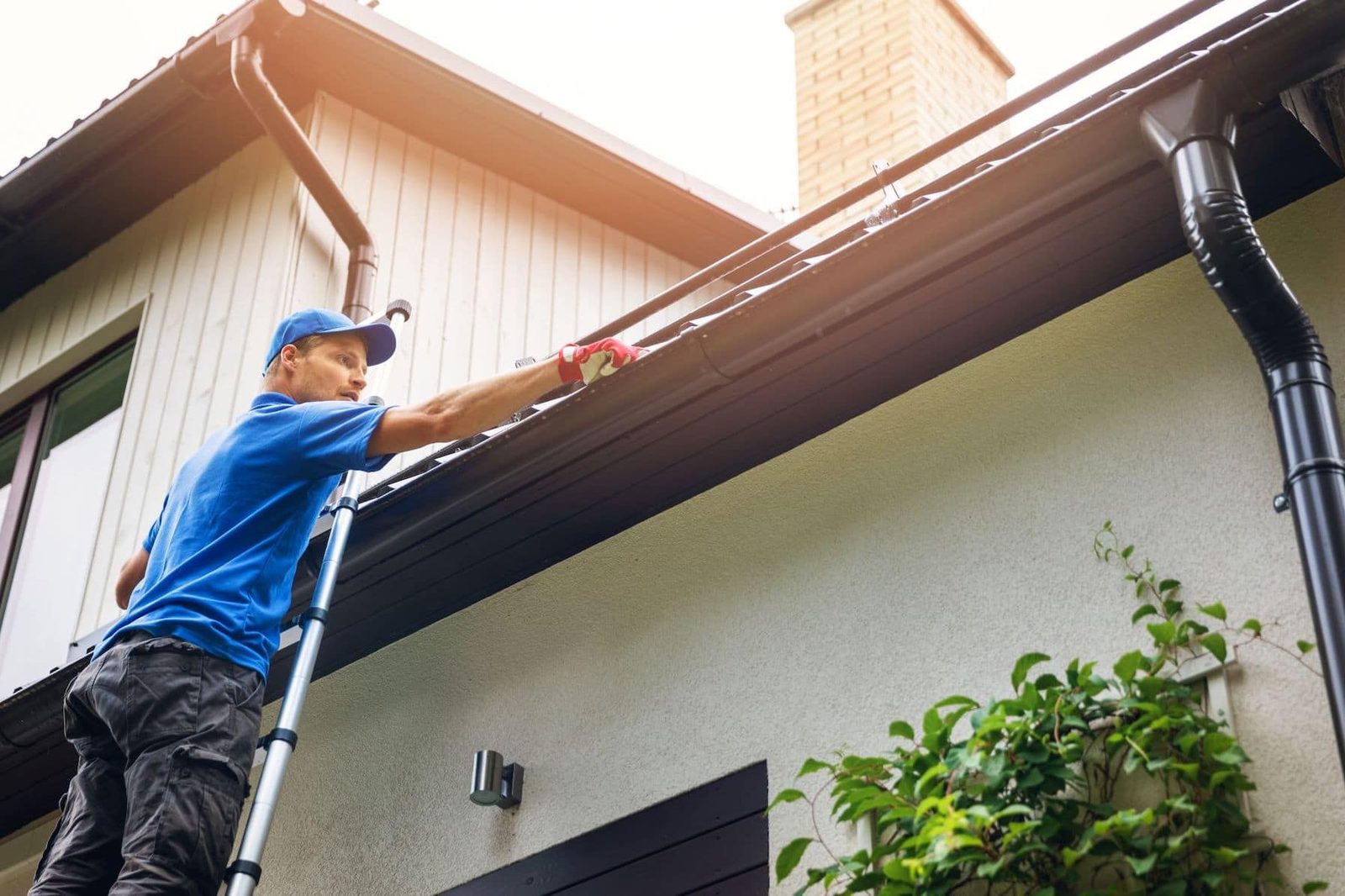
Summer: long days, hot metal
June through August is fine for hanging gutter. Days are long and roofs are dry. Two things to know, though.
Aluminum grows in the heat. A long straight run hung on a 95-degree afternoon needs room at the ends, and on really long runs an expansion joint, or it can buckle and pull at the seams once winter shrinks it back. And pop-up afternoon storms can stall a job halfway. A careful crew doesn't tear off more than it can rehang the same day, so a summer install sometimes gets split around the weather.
Late summer into fall is the sweet spot
If you get to choose, choose late August through October. The storm backlog has usually cleared. Rain days are fewer. And the new gutter is in place before the oaks drop acorns and the maples let go of their leaves, so its first real test is one you'd have faced anyway.
One caution. New gutter clogs just as fast as old gutter. If you aren't adding guards, plan a cleaning in late November or December after the last of the leaves are down. The timing is spelled out on our fall cleaning page.
Fall isn't always calm
October has its own weather. A strong cold front can push wind through the metro hard enough to peel a loose run off a house, and sleet sometimes shows up before Thanksgiving. Booking in late summer, instead of waiting for the last nice week of fall, leaves room for a rain delay or two without sliding the job into December.
Winter works, with limits
We hang gutter in winter, and sometimes it's the right call, like when ice has torn a run off the house. The metal itself doesn't mind the cold much. Sealant is the weak point. Corner and end-cap sealant wants dry metal and some warmth to cure, so a crew picks the milder days and seals in the afternoon, not at seven in the morning on frosty aluminum.
What you shouldn't do is hang new gutter under a roof that's growing ice dams every January. Sort out the attic side first or the new gutter takes the same beating. Our ice dam page explains why.
If the roof is coming off too
When a roof replacement is in the next year or two, don't put new gutter on first. Roof crews work right at the eave. Old shingles slide off, new drip edge goes on, and ladders lean against whatever's there. Brand-new gutter picks up dents it didn't need.
The better order is roof first, gutter right after, with the drip edge set so it laps into the trough. When John Beal Roofing does both, the same company schedules them back to back. If somebody else has the roof, we'll coordinate with them.
Price and the calendar
We won't pretend there's a month when gutters go on sale. Price comes off the house: footage, height, profile, color, how many corners and downspouts, and whatever needs fixing behind the gutter. Material costs drift with the market, not with the weather.
What does change with the season is how soon you get a date. That's worth more than people think when water is getting in. Our gutter cost breakdown covers the drivers in detail.
Signs that won't wait for October
Gutter that has pulled away and lets water run behind it. Fascia soft enough to take a screwdriver. A patch of yard by the downspout that has sunk, or a basement wall that stays damp. Rust holes along the bottom of old steel gutter. None of those get cheaper by waiting for nicer weather.
Related gutter work
Booking guards and gutter together
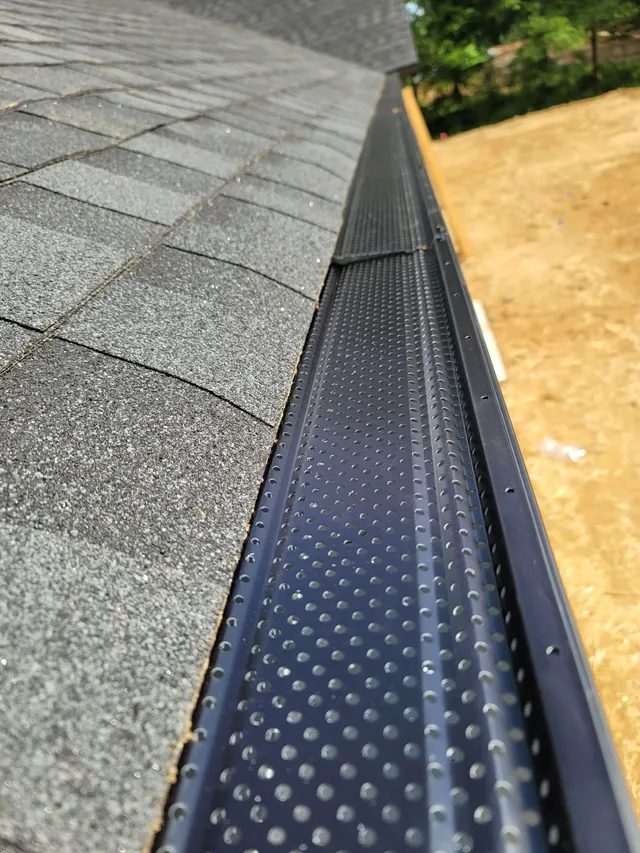
If you're planning micro-mesh guards, put them on the same day as the new gutter. The crew is already set up, the hangers are new and evenly spaced, and the guard sits on clean metal instead of being fitted around old dents and patches.
If the budget covers only one this year, do the gutter. A guard on failing gutter is money thrown at the wrong problem. Our gutter guard options lay out what fits which roof.
Timing questions we hear
How far ahead should we book gutter replacement?
It swings with the weather. After a big hailstorm the wait can stretch to weeks. In a quiet stretch it's much shorter. Calling early never costs you anything, since the estimate is free.
Can new gutters go up in the rain?
A hanger-only repair in light drizzle, maybe. A full replacement needs dry metal at the corners so the sealant bonds, so we'd rather reschedule than seal wet joints.
Is gutter replacement cheaper in the winter?
Not because of the season itself. The price comes from the house. Winter can be easier to schedule, which is its own kind of savings if water is getting in.
Should new siding or new gutter go on first?
Siding first in most cases, because the gutter fastens over fascia and trim the siding crew may be replacing. If the gutter is failing badly it can go up now and come down for the siding later, but that's a second visit you'll pay for.
How long does a full gutter replacement take?
Many single-family homes take a day once the material is ready. Rotten fascia, a tall elevation or a lot of corners can add time, and we'll tell you up front.
Get on the schedule
Tell us roughly when you'd like the work done and whether a roof replacement is planned.
A St. Louis gutter company that plans around the weather
Family-run since 1947, third generation, lifetime workmanship warranty. Free estimates in any season, and the phone is answered 24/7.